#OurHousingStory
American Property Owners Alliance
Creative Direction
Information Architecture
UX Design
Creative Strategy
Illustration
Responsive Web
My Role
Led the campaign's visual brand and identity from concept to launch
Owned the end-to-end UX — from early wireframes through final prototypes
Built a modular design system to drive consistency across every touchpoint
Managed developer handoff and stayed hands-on through implementation and QA
Team
Design/UX Lead (me)
Content Writer (Melanie Vynalek)
Web Developer (Alison Phanthavong)
Digital Strategist (Carter Mitchell)
Account Supervisor (Amber Hord)
Results
350+ voter stories collected.
Activated 5,000+ new advocates
Campaign is a SABRE Awards Finalist
Challenge
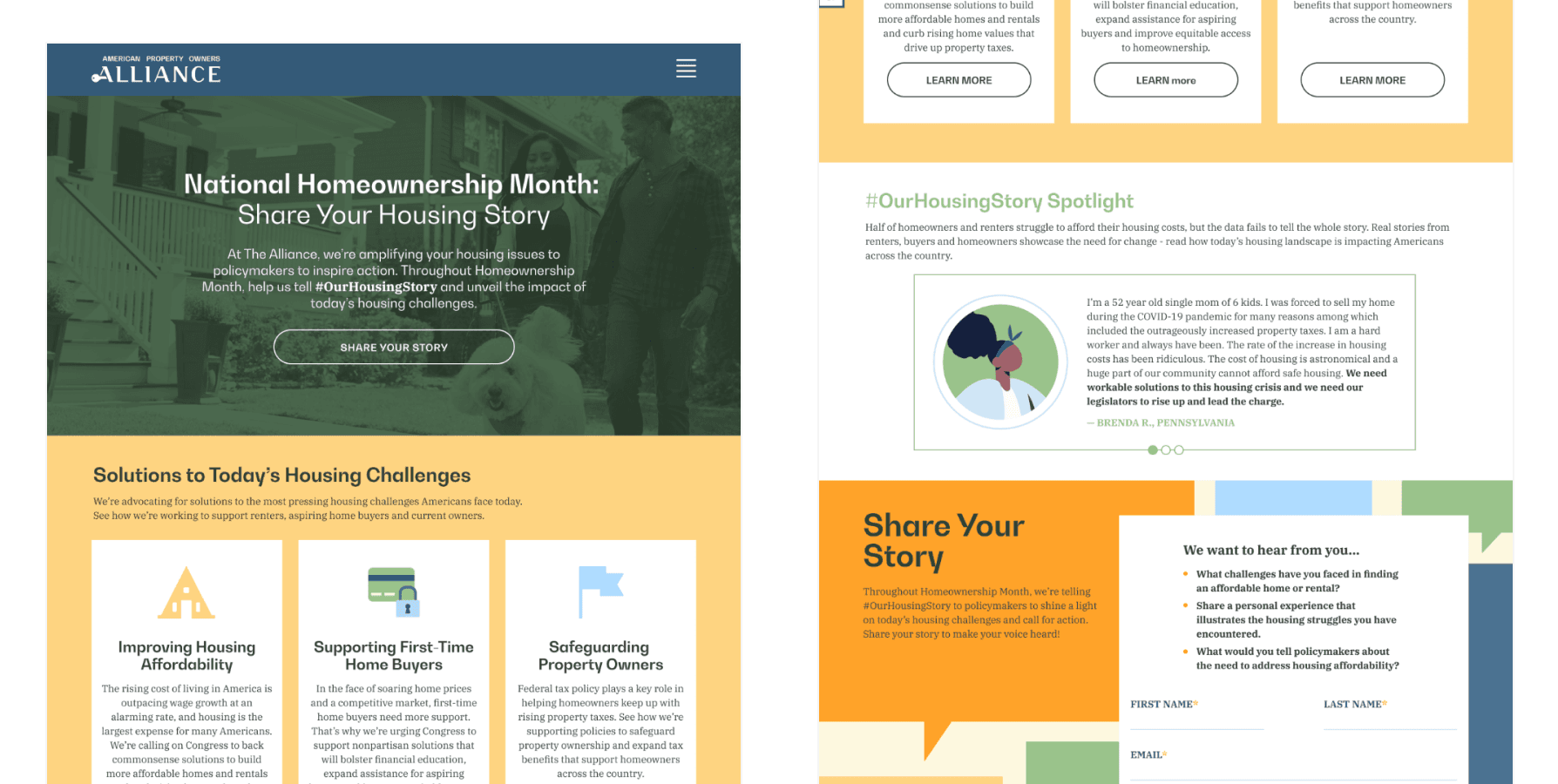
The American Property Owners Alliance, a nonpartisan, nonprofit organization, needed to elevate housing affordability as a top priority for the 2024 election, to build momentum for legislative action in 2025. The campaign needed to increase visibility around voter concerns, drive engagement, and build support for common-sense housing policies.
Our challenge was to conceptualize, design, and launch a full campaign that felt human—not just data-driven. That’s where #OurHousingStory came in: a storytelling platform built to gather and highlight real experiences from voters, offering a more personal and emotional perspective on housing in America.
Over six months, I led the visual design direction, shaped the campaign brand presence, and defined the user experience for the campaign landing page.
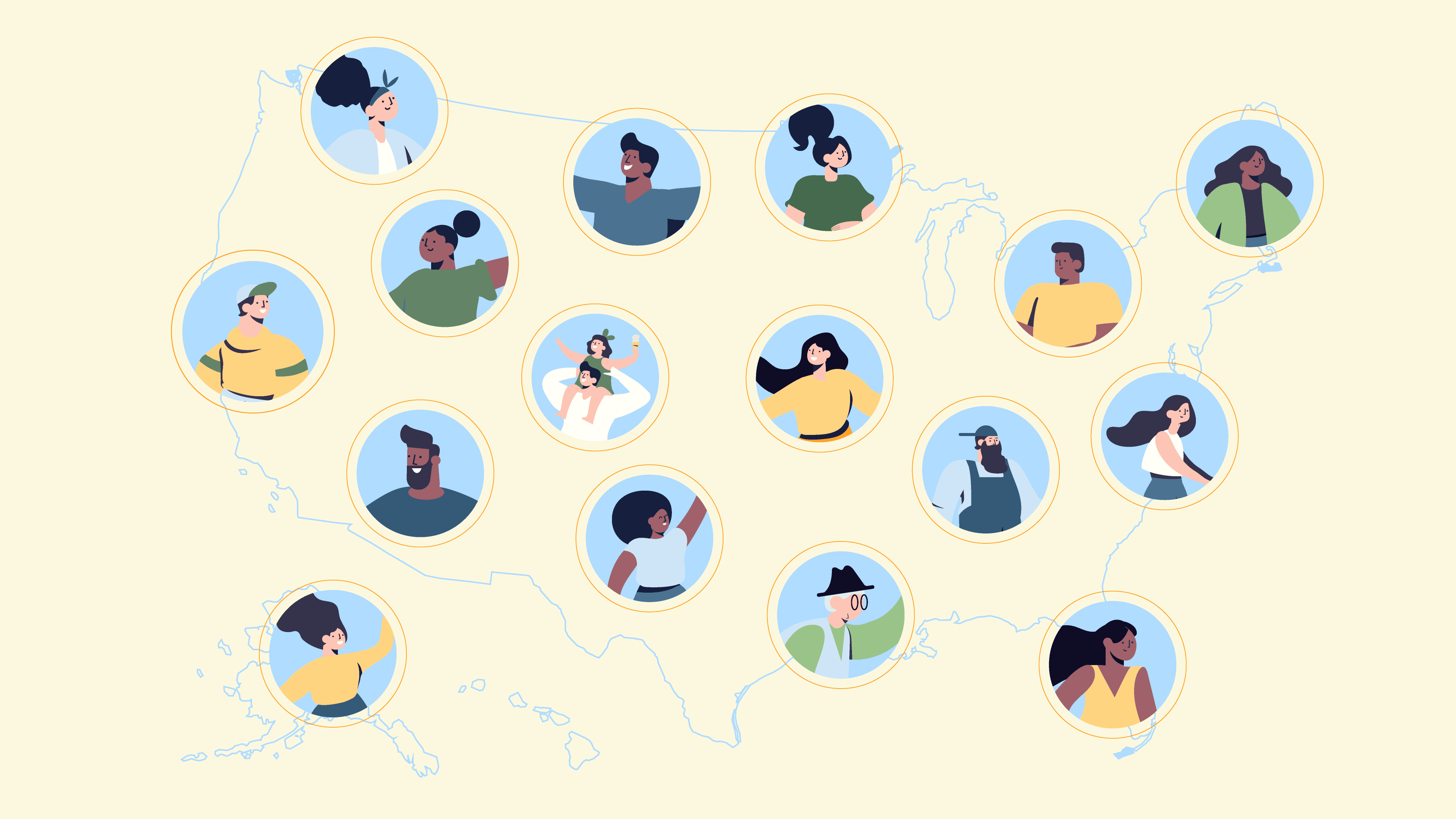
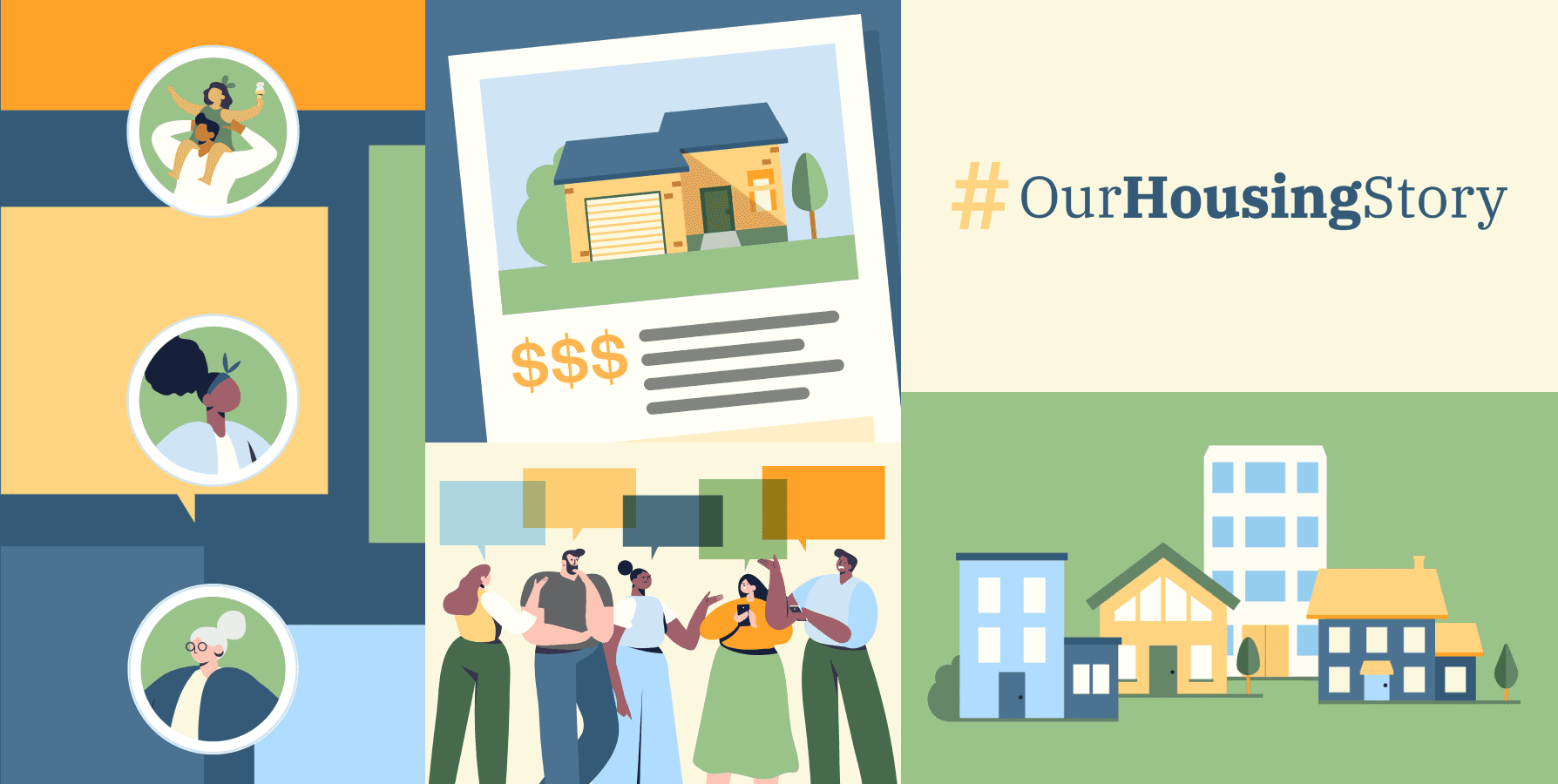
APOA had a strong visual identity, but it leaned heavily on photography to represent real advocates. Rather than defaulting to stock imagery, we shifted to an illustration-forward approach—one that felt fresh while staying true to APOA's existing brand.
Insights
Leveraging APOA’s existing brand system
Our team had a head start — we were already mid-way through an APOA brand expansion and site refresh, so I had deep familiarity with their brand language. I spent significant time building, maintaining, and evolving that system, which made it much easier to extend cohesively into this campaign.
A big part of my role was creating and maintaining modular components that could scale beyond this one landing page. This helped shift the team’s mindset toward designing reusable, flexible landing page templates that could work across the broader site.
Advocating for user testing
I partnered with our developer to advocate for user testing via Hotjar, so we could validate assumptions and catch pain points before they became problems.
Hearing users explain their frustrations in their own words gave the team clarity on what was working and what wasn’t. Those insights—combined with APOA’s business goals—directly shaped our design decisions and content updates.
Designing within technical limitations
Our developer was less experienced with complex interactive builds, so I calibrated the design to be ambitious in vision but achievable in execution — no compromises on quality, just smart scoping.
What I did
Designed impactful visuals
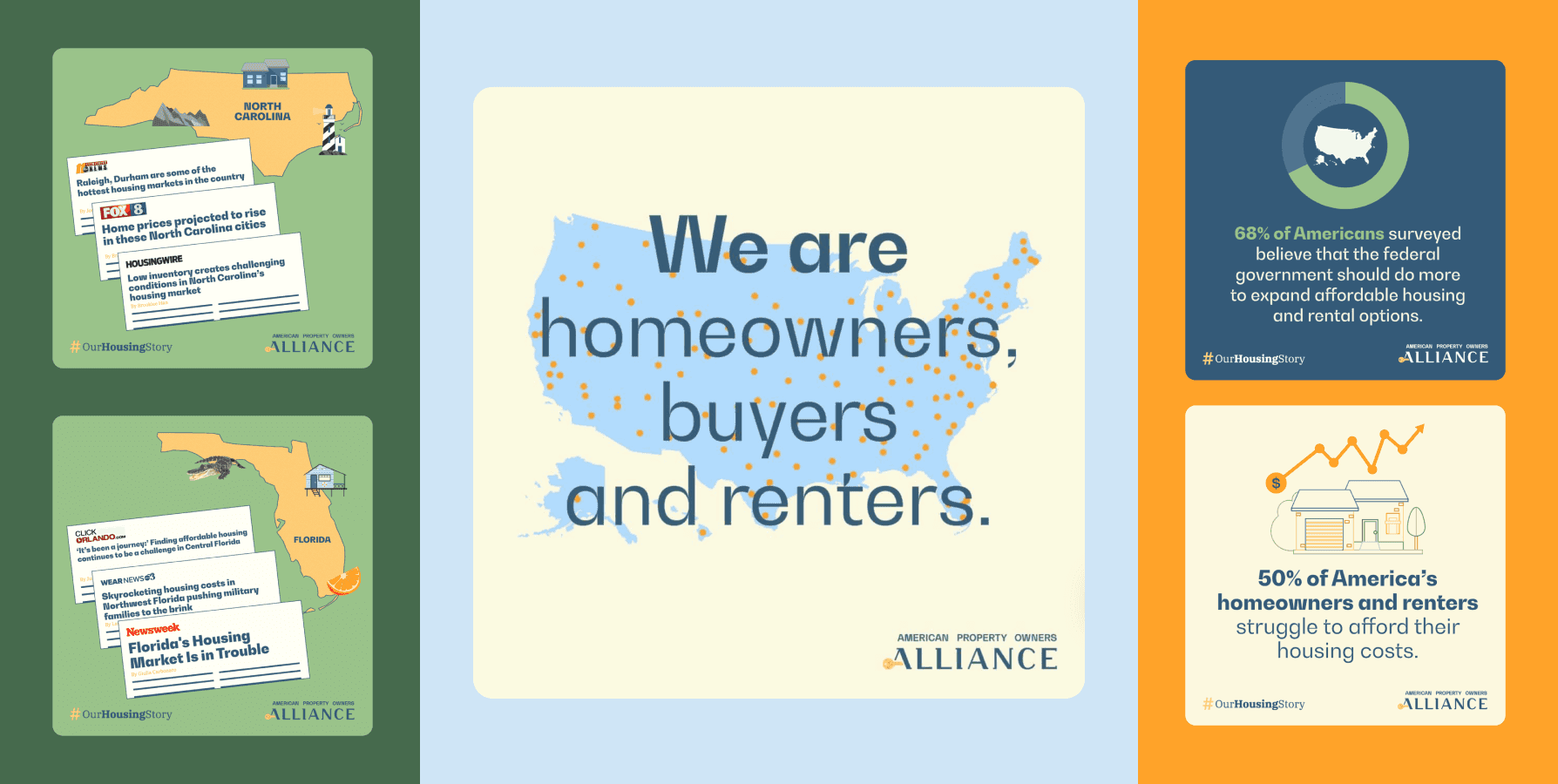
As the lead designer on the APOA account, I shaped the visual direction across all projects — and for this campaign in particular, I built a cohesive identity that felt approachable, modern, and built for advocacy.
Streamlined the user experience strategically
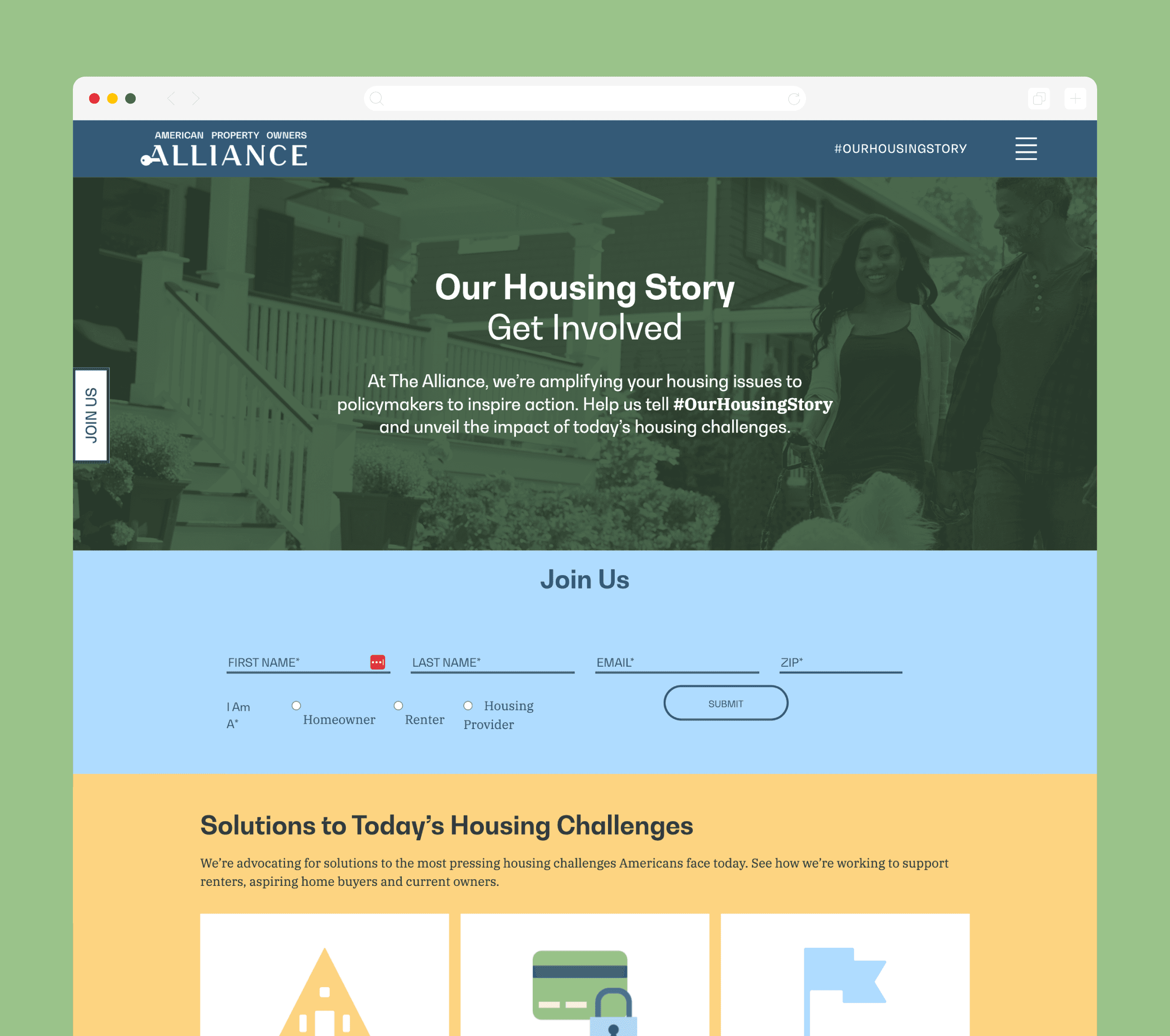
Drawing on my visual design background, I focused on making the landing page feel intuitive from the moment someone arrived — especially for first-time advocates who were new to the campaign.
Prioritized accessibility and responsive design
Accessibility was a major focus throughout the project. I worked with stakeholders and internal teams to align the page with current WCAG standards and ensured the mobile experience was treated as a priority—not an afterthought.
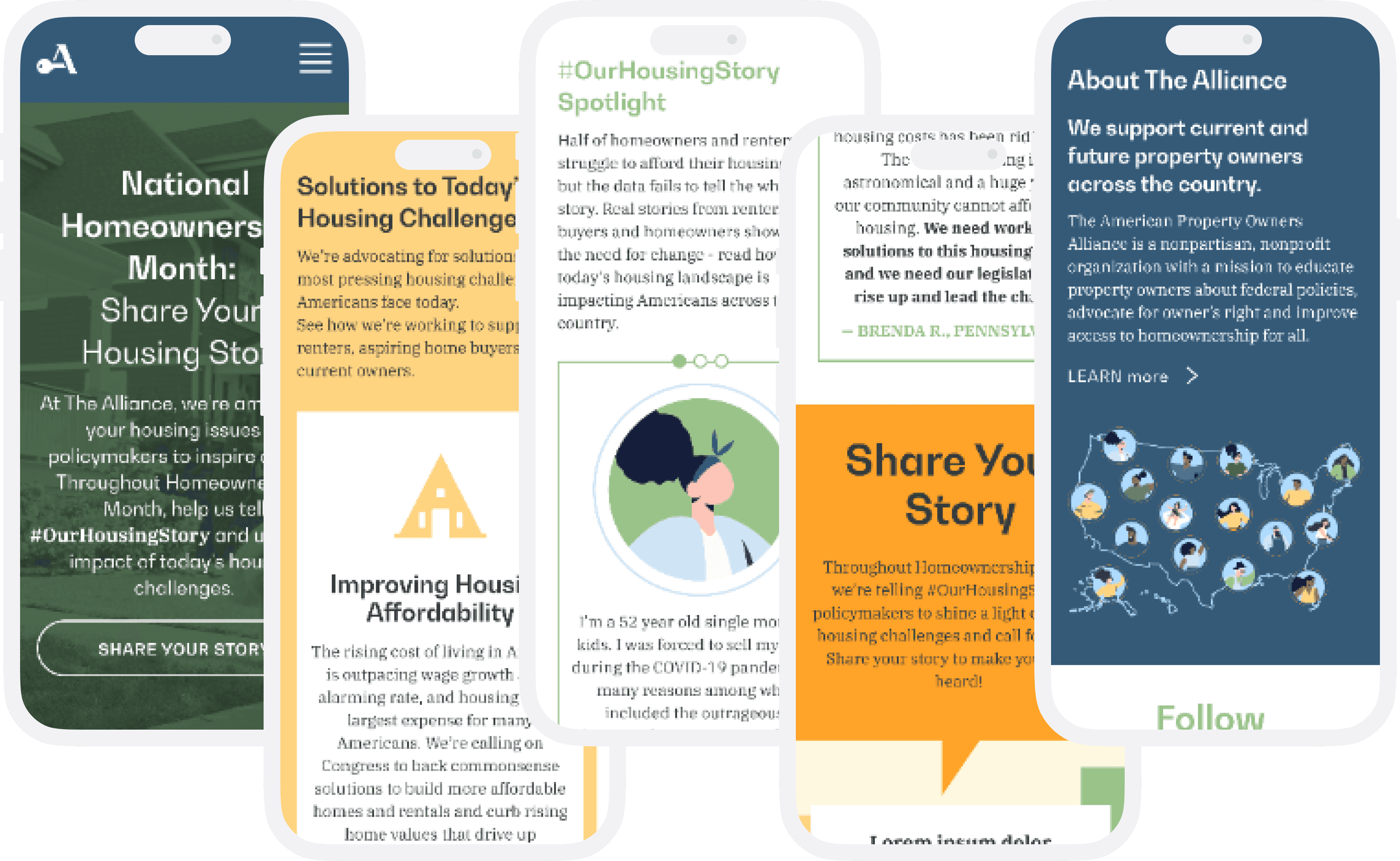
I also collaborated closely with developers to make sure interactive elements were obvious and usable. For example, we added arrow buttons to carousels to improve clarity and usability across devices.
Design Handoff
To ensure a smooth build, I worked closely with our developer throughout the entire campaign—from early layout planning to final implementation. We worked through multiple iterations together. I provided detailed specs, responsive layouts, and interaction guidance — then stayed actively involved during the build to QA, troubleshoot, and refine based on what we learned in testing.
Results
The campaign highlighted stories from homeowners, renters, property owners, and future homeowners through paid social ads, display ads, and email marketing. By the end of the campaign, we collected 350+ voter stories.
The landing page became the central hub for story collection and community visibility, while also serving as an entry point for new advocates to explore the rest of the APOA site.
Using insights from user testing conducted before and during the campaign, we refined the experience across both desktop and mobile, improving usability and reducing friction for advocates.
Overall, the campaign helped activate 5,000 new advocates, increased engagement across multiple touchpoints, and expanded visibility among key audiences.
350+ voter stories collected.
Activated 5,000+ new advocates
Campaign is a SABRE Awards Finalist