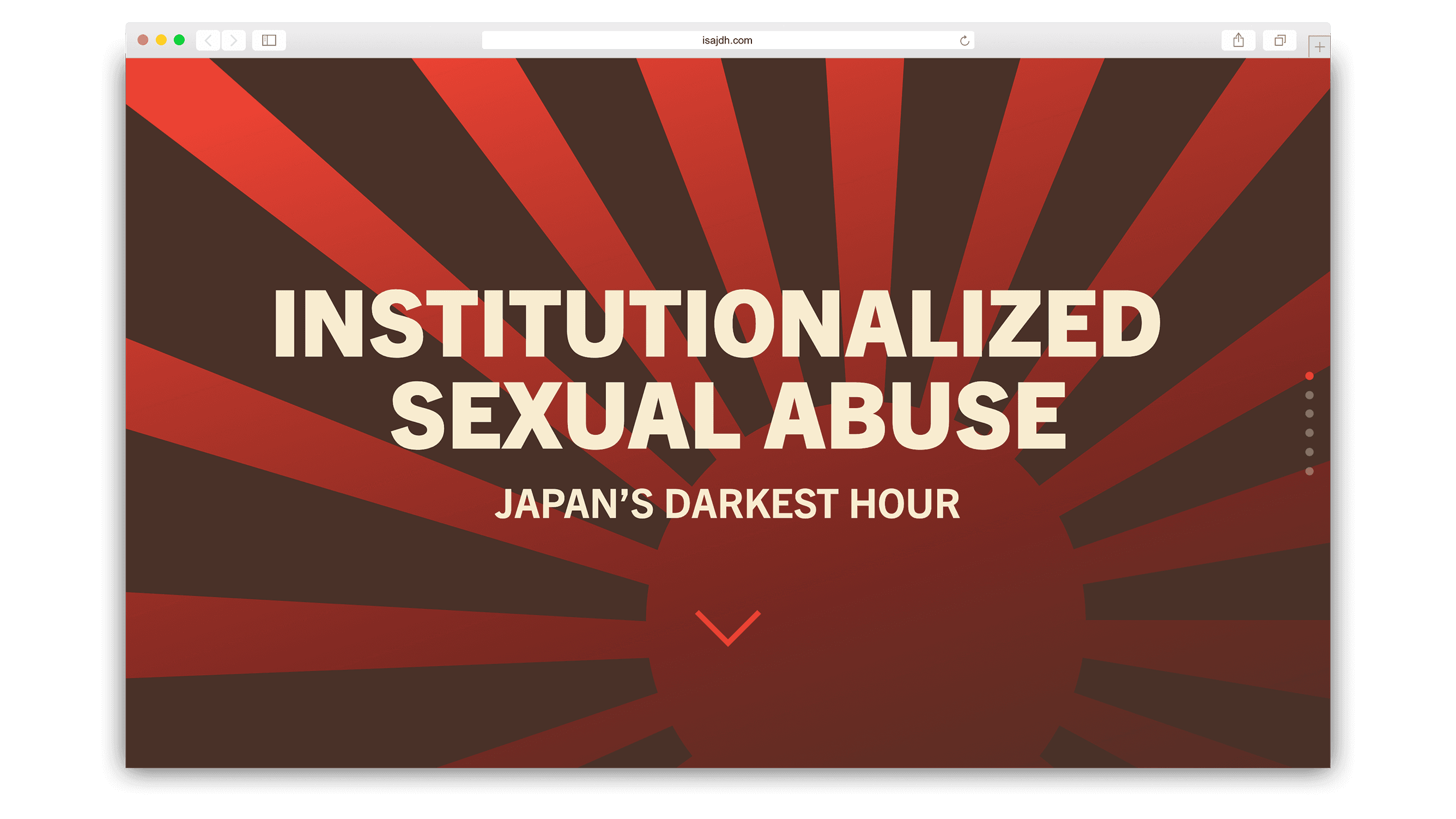
Institutionalized Sexual Abuse:
Japan's Darkest Hour
Personal Project
Brand Identity
Web Design
Content
Front End Development
My Role
Researched and developed a comprehensive narrative on the history of “comfort women”
Designed the full web experience (UX + visual design)
Created original data visualizations and illustrations
Built the site from scratch using HTML, CSS, and JavaScript
Results
Conducted 6 months of independent research, synthesizing 40+ academic and historical sources into a structured digital narrative
Consolidated fragmented information into a single, centralized educational resource
Executed the project end-to-end independently, covering research, UX strategy, visual design, and front-end development
Challenge
A self-directed passion project exploring how design, data visualization, and front-end development can work together to educate — built independently over six months as my UArts senior thesis.
I set out to create a digital experience that explores a historically silenced yet widely known topic in East Asia: the lives of “comfort women.” The goal was to demystify their history—from why Japan institutionalized military sexual slavery to why surviving women continue advocating for justice today.
This topic has stayed with me since my East Asian history courses, where I first began to understand how deeply World War II shaped post-war Asia. As I began researching, I discovered how fragmented and limited the accessible information was online. There was no centralized, digestible platform that told the full story in a way that was both educational and human-centered.
I wanted to build a single, consolidated experience that made this history accessible to a broader audience.
Over six months, I owned the full project independently — from content strategy and storytelling through visual direction, UX design, and front-end development.
Insights
Distilling the weight and gravity of the topic
From the moment I proposed this topic to the design committee, I knew it would be sensitive and potentially controversial. The history of “comfort women” remains politically charged due to ongoing disputes over accountability, consent, and the legacy of Japanese colonialism.
“Comfort women” refers to the system of sexual slavery created and controlled by the Imperial Japanese government between 1932 and 1945. It is the largest case of government-sponsored human trafficking and sexual slavery in modern history. Many scholars have argued that the term comfort women, a euphemism coined by the Japanese military, obscures the gravity of the crime.
I approached the project with care, recognizing that the past cannot be erased—no matter how painful—but it can be acknowledged and learned from. My goal was to present these women’s stories with tact, clarity, and grace.
Because this issue touched multiple countries and societies, I was deliberate about avoiding a one-sided narrative. My central aim was to honor these women's experiences and humanity — while still acknowledging the broader historical contexts of all parties involved, to give viewers a fuller, more informed understanding.
Designing with limited visuals
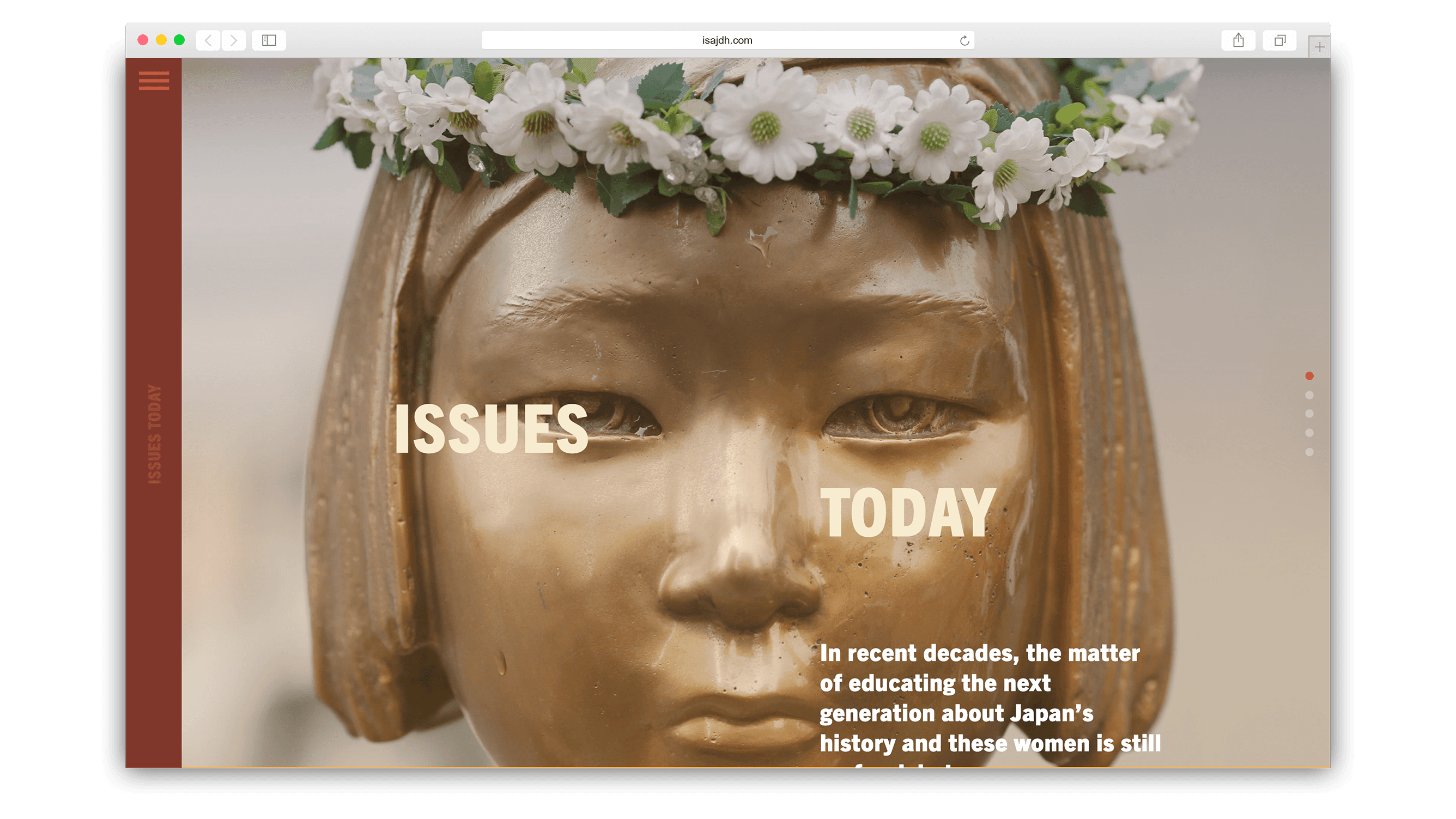
One of the biggest challenges I faced was the lack of archival imagery and documentation. There were very few visuals that could ethically and respectfully represent what these women endured.
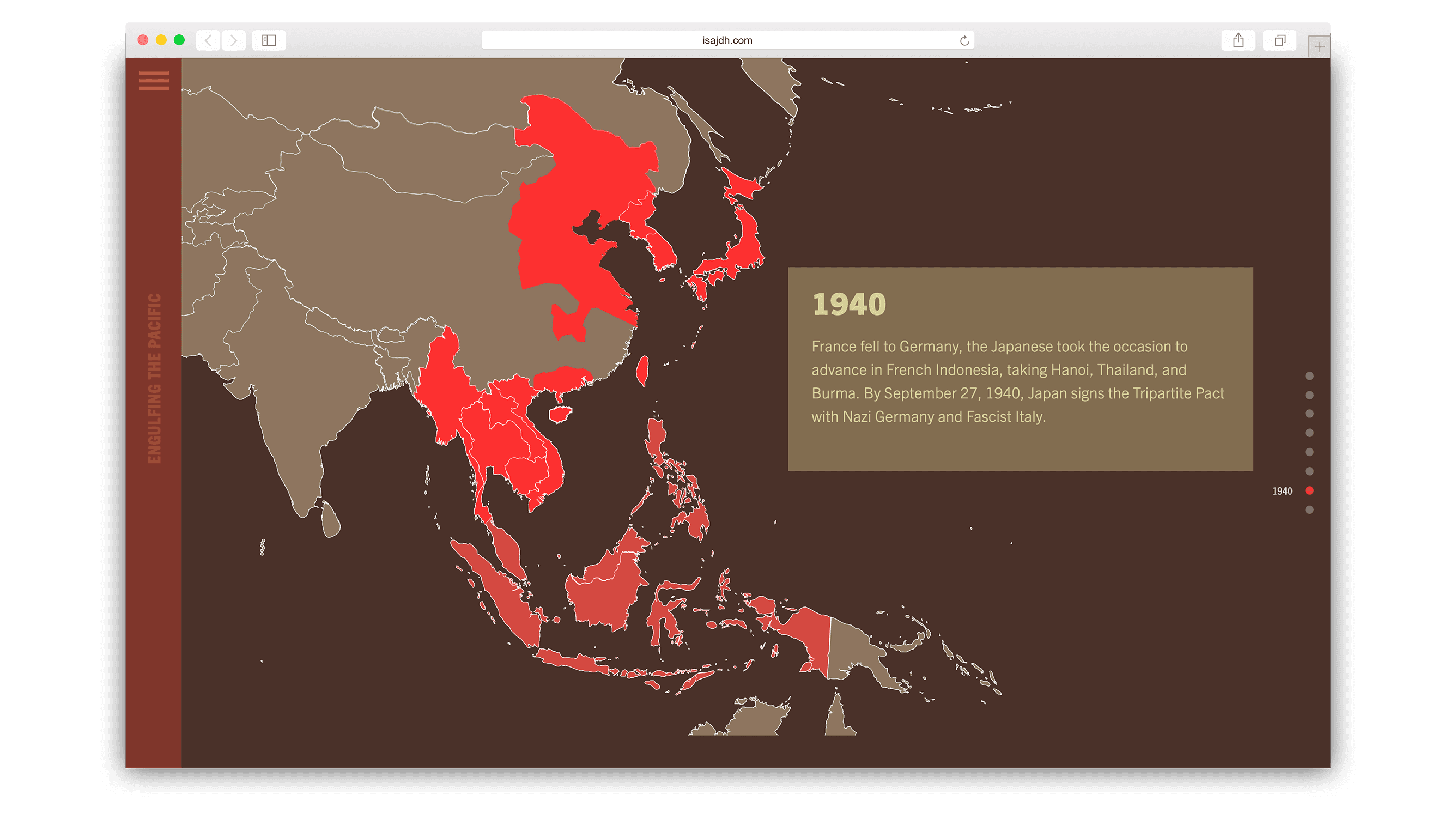
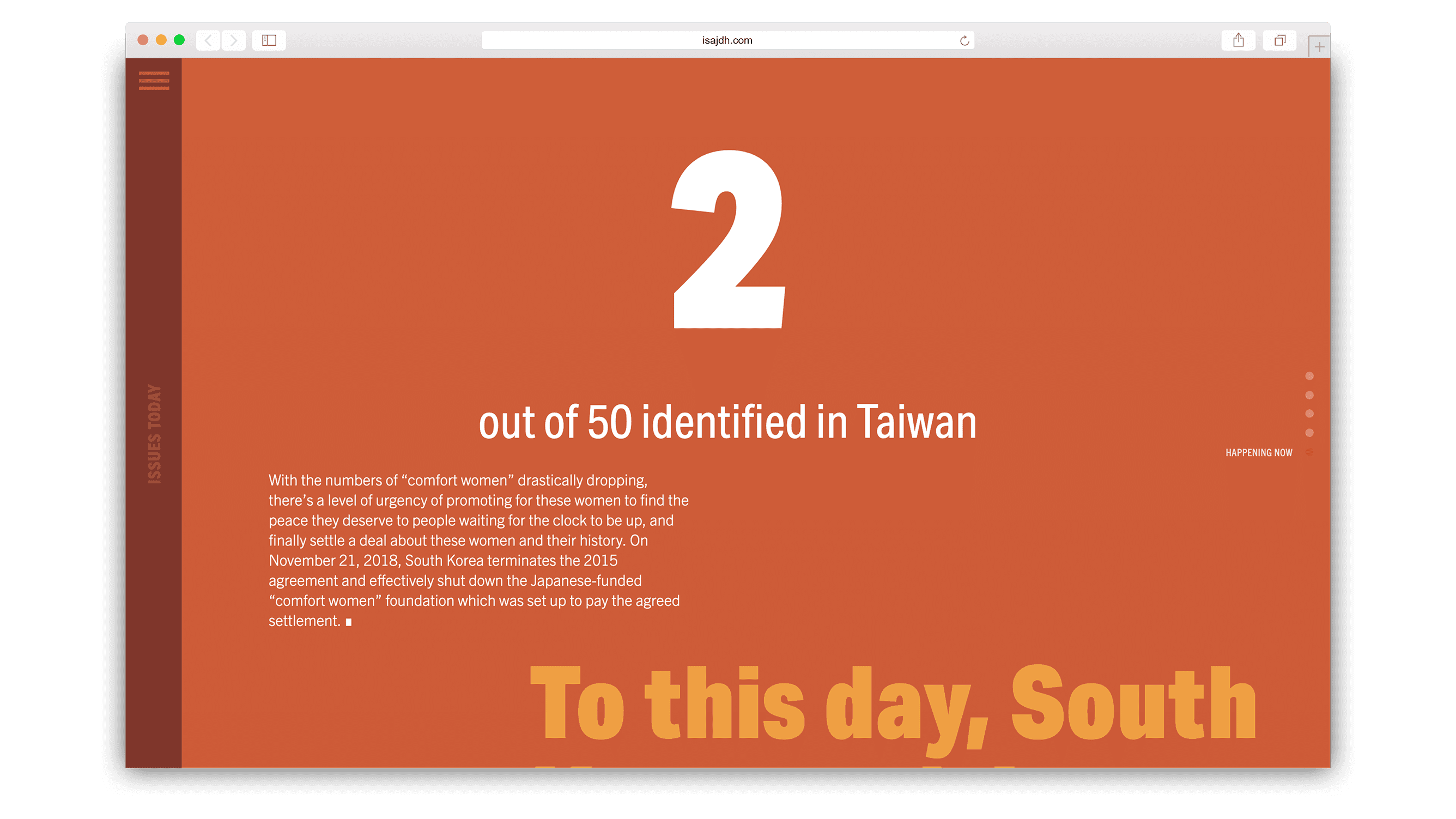
Instead of forcing imagery where it didn't belong, I leaned into data visualization and typography to carry the weight of the story. Statistics, timelines, and carefully chosen data points illustrated scale and historical context — letting the facts speak clearly without sensationalizing trauma.
What I did
Creating a compelling story from fragmented information
Because the information available online was scattered and often inconsistent, I had to distill complex historical documentation into a clear, structured story. I organized the experience chronologically—context, institutionalization, aftermath, and ongoing advocacy—so visitors could move through the narrative with clarity.
The storytelling approach balanced educational context with human-centered framing, ensuring the women were not reduced to statistics alone.
Designed impactful, respectful visuals
A constant question guided my design decisions: How do I communicate horror without exploitation? How do I convey grief while preserving dignity?
I relied on restrained typography, negative space, and muted color choices to create a tone of solemnity and respect. Data visualizations became the primary visual language, transforming raw information into meaningful insight without relying on graphic imagery.
Building the website from scratch
I developed the site using HTML, CSS, and JavaScript, bringing the entire experience to life independently. Building it myself allowed me to fully control pacing, layout, rhythm, and interaction design—ensuring the storytelling and user experience worked seamlessly together.
Owning it end-to-end meant nothing got lost in translation between design intent and what actually shipped.
Results
This project serves as a permanent, digital archive intended to preserve and amplify the history of “comfort women” in an accessible format. It transforms fragmented research into a cohesive, educational experience that encourages reflection and awareness.
It was selected as a multidisciplinary showcase for the UArts School of Design Senior Show — spanning research, UX, data visualization, visual design, and front-end development, all in one self-directed project.
Most importantly, it's a reminder that design isn't just about making things look good — it's about making hard things understandable, and giving people the context they need to care
Conducted 6 months of independent research, synthesizing 40+ academic and historical sources into a structured digital narrative
Consolidated fragmented information into a single, centralized educational resource
Executed the project end-to-end independently, covering research, UX strategy, visual design, and front-end development